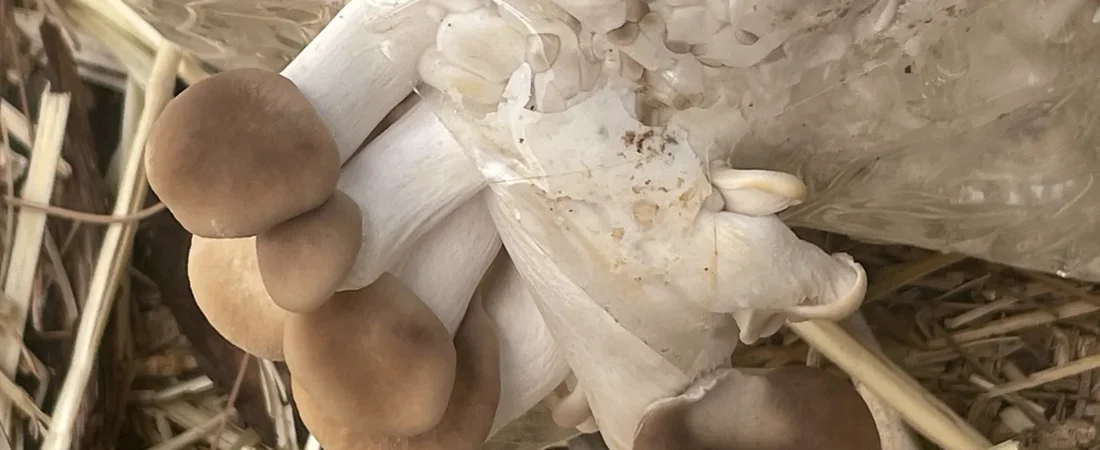
An examination of Pleurotus pulmonarius, from its role in forest ecosystems to its potential applications in biotechnology.
The Italian oyster mushroom (Pleurotus pulmonarius) is one of several closely related species of oyster mushrooms cultivated for food. It is generally associated with warmer growing conditions than the familiar pearl oyster (Pleurotus ostreatus), which makes it an interesting species for indoor cultivation, particularly in warmer climates.
But cultivation is only one aspect of its biology. In nature, P. pulmonarius participates in the decomposition of woody plant material, recycling carbon and other nutrients through forest ecosystems. Like other white-rot fungi, it produces enzymes capable of breaking down lignin, one of the more resistant components of plant cell walls. Some of these same enzymes have attracted attention from researchers investigating the biological treatment of industrial pollutants.
There is also a less obvious aspect of its ecology. Although primarily known as a decomposer, P. pulmonarius belongs to a group of fungi capable of attacking and consuming microscopic nematodes.
Understanding this species requires looking beyond the mushrooms themselves. The visible fruiting bodies are temporary reproductive structures produced by a much larger organism, and many of the biological processes that make the Italian oyster interesting take place within the substrate, where they are generally out of sight.
Classification and Taxonomic History
The Italian oyster belongs to the family Pleurotaceae, within the order Agaricales. Its currently accepted scientific name is Pleurotus pulmonarius (Fr.) Quél.
The species was originally described in 1821 by Swedish mycologist Elias Magnus Fries, who named it Agaricus pulmonarius. At that time, the genus Agaricus included many gilled mushrooms that would later be assigned to separate genera.
In 1872, French mycologist Lucien Quélet transferred the species to Pleurotus, establishing the name used today.
The original description was associated with birch wood in Sweden, so despite the common name Italian oyster, its recorded scientific history does not identify Italy as its place of origin. The species has a much broader geographical distribution.
The genus name Pleurotus refers to the lateral or sideways attachment characteristic of many oyster mushrooms. The specific epithet pulmonarius refers to lungs, apparently describing the shape or appearance of the fruiting body.
Italian oyster is not its only common name. Depending on the region and supplier, P. pulmonarius may also be called the lung oyster, pale oyster, Phoenix oyster, or summer oyster. Common names are not always applied consistently, particularly within commercial mushroom cultivation.
For scientific purposes, the Latin name is more useful, although even this does not tell us everything about a particular culture.
Why Species Identification Matters
One complication in studying oyster mushrooms is that several species can look remarkably similar.
P. pulmonarius and P. ostreatus both produce clusters of fan-shaped mushrooms with gills extending down an off-center stem. Their color, size, and shape vary substantially with genetics and growing conditions, making identification by appearance alone difficult.
Historically, the two were sometimes treated as closely related forms of the same species.
Research using mating experiments and molecular markers has since provided evidence that they are distinct biological species. Shnyreva and Shtaer (2006), for example, demonstrated reproductive isolation between P. pulmonarius and P. ostreatus, despite their overlapping morphological characteristics.
This distinction becomes important when interpreting cultivation research. A study involving P. ostreatus may provide useful information about the biology of oyster mushrooms generally, but its results cannot automatically be applied to P. pulmonarius.
Even within a species, strains can respond differently to temperature, substrate composition, and other environmental conditions.
The Italian Oyster in Its Natural Environment
Pleurotus pulmonarius occurs in temperate and warmer forest ecosystems across several continents. It grows primarily on dead or dying woody material, including fallen trunks, stumps, branches, and standing trees containing decaying wood.
It is most frequently associated with broadleaf trees.
Reported hosts include birch, beech, willow, and various other hardwoods. A study of its distribution in the Novosibirsk region of Russia found the species mainly on deciduous trees, particularly birch and aspen, although an occurrence on a conifer was also recorded (Vlasenko et al., 2019).
That distinction matters because oyster mushrooms are often described simply as hardwood decomposers. Hardwood is certainly an important habitat, but natural substrate associations can be broader than a general description suggests.
The species’ geographical range also means that it encounters very different environmental conditions. A strain occurring in a northern forest does not necessarily have the same temperature responses as one originating in a tropical environment.
Seasonal Fruiting
Italian oysters are frequently associated with summer and early autumn fruiting.
In the Novosibirsk study, fruiting was recorded from May through October, with the highest activity in August and September. This contrasts with the autumn and cooler-season fruiting behavior commonly associated with many strains of P. ostreatus.
However, warmer temperatures alone do not cause mushrooms to appear.
Fruiting depends on several interacting conditions, including the physiological maturity of the mycelium, available moisture, humidity, temperature, and gas exchange.
A fungus may remain established inside a log for a considerable period without producing visible mushrooms. When environmental conditions become suitable, the mycelium can redirect resources toward producing fruiting bodies.
These structures eventually release basidiospores, which can disperse and potentially establish new fungal colonies.
The distinction between mycelial survival and fruiting is particularly important in dry climates. Even if the mycelium can tolerate relatively warm conditions within its substrate, the developing mushrooms remain vulnerable to drying.
White-Rot Decomposition
The Italian oyster is primarily a saprotrophic fungus, meaning it obtains nutrients by decomposing organic matter.
Wood presents an unusual nutritional challenge. Much of its carbon is contained within cellulose and hemicellulose, while lignin contributes to the structural resistance of plant cell walls.
Lignin is a complex aromatic polymer that helps give woody plants their rigidity. Its irregular chemical structure makes it more difficult to decompose than many simpler organic compounds.
White-rot fungi have evolved enzymatic systems capable of modifying lignin and degrading other components of plant cell walls.
P. pulmonarius belongs to this group.
Rather than digesting wood internally, the fungus releases extracellular enzymes into its surroundings. These enzymes act on the substrate, allowing smaller products of decomposition to become available for uptake and metabolism.
The process changes both the chemistry and physical structure of the wood.
As decomposition progresses, carbon compounds are transformed, nutrients become available to other organisms, and the material gradually becomes part of the broader soil organic matter cycle.
This is one reason fungi occupy such an important ecological role. Without decomposers capable of processing resistant plant material, woody debris would accumulate very differently, and the cycling of nutrients through terrestrial ecosystems would be substantially altered.
It is important, however, not to confuse this process with mycorrhizal symbiosis.
Italian oysters are not primarily mycorrhizal fungi. They do not ordinarily form the nutrient-exchange relationships with living roots that characterize many forest mycorrhizal species. Their contribution to plant and soil systems comes principally through decomposition and its ecological consequences.
An Unexpected Ecological Behavior: Nematode Predation
Although Italian oysters obtain much of their nutrition from decomposing plant material, members of the genus Pleurotus can also attack nematodes.
Nematodes are microscopic roundworms found in soil, decaying vegetation, and many other environments. They represent a diverse group that includes free-living decomposers, predators, and parasites of plants and animals.
Research has demonstrated that Pleurotus mycelium can immobilize and kill certain nematodes through chemical mechanisms associated with its hyphae.
This raises an interesting ecological question. Why would a wood-decomposing fungus need to capture animals?
Wood contains abundant carbon but is often relatively poor in readily available nitrogen. Nematode predation may provide an additional source of nutrients, particularly under nutrient-limited conditions.
Research involving P. pulmonarius has provided evidence of significant differences in nematode toxicity between genetically distinct isolates.
A genomic study published in G3: Genes, Genomes, Genetics examined two single-spore isolates obtained from the same wild Italian oyster mushroom. The isolates differed in growth characteristics and their ability to immobilize nematodes.
The researchers produced detailed genome assemblies to investigate the genetic basis of these differences.
The findings are significant because they demonstrate that even closely related cultures can differ in biological characteristics beyond mushroom yield or growth rate.
They also illustrate the limits of describing fungi exclusively according to familiar ecological categories. A species can function primarily as a decomposer while obtaining additional nutrients through predatory behavior.
This does not establish that introducing Italian oyster mushrooms into garden soil will control plant-parasitic nematodes. Laboratory evidence of predation is not the same as field evidence of agricultural pest control.
Indoor Cultivation and Environmental Requirements
The Italian oyster is cultivated commercially because it can colonize a wide variety of plant-based substrates and produce edible fruiting bodies under controlled conditions.
Its association with warmer fruiting conditions makes it especially interesting where maintaining the low temperatures preferred by some other oyster mushrooms would require additional cooling.
However, the term warm-weather mushroom can be misleading.
Temperature preferences are not identical across all Italian oyster strains, and the temperature supporting mycelial growth may differ from the conditions that encourage fruiting.
What Cultivation Research Actually Shows
A particularly useful investigation was published in 2017 by Myronycheva and colleagues in BioResources, titled “Assessment of the Growth and Fruiting of 19 Oyster Mushroom Strains for Indoor Cultivation on Lignocellulosic Wastes.”
The researchers evaluated twelve strains of P. ostreatus, six strains of P. pulmonarius, and a commercial comparison strain.
They measured mycelial growth, fruiting behavior, biological efficiency, and characteristics of the harvested mushrooms under different seasonal cultivation conditions.
One of the most important findings concerned P. pulmonarius strain 2314.
Under the summer conditions examined, this strain demonstrated particularly promising production characteristics, including rapid development and relatively high biological efficiency.
Its biological efficiency reached approximately 62% over the reported production cycles, considerably higher than that of the other P. pulmonarius strains tested under those conditions.
The study also found that strain 537 produced fruiting bodies with particularly desirable commercial qualities.
This is a useful distinction. A strain that produces the greatest quantity of mushrooms is not necessarily the one that produces the best mushrooms for fresh sale.
Cap shape, stem proportion, uniformity, appearance, and harvest characteristics can all affect commercial value.
The study does not demonstrate that every Italian oyster strain will grow well under summer conditions. Rather, it establishes that some strains have characteristics that make them particularly suitable for warmer production environments.
Temperature, Humidity, and Fruiting
Research involving P. pulmonarius has produced mushrooms under a fairly broad range of environmental conditions.
In a 2019 study examining agricultural substrates, researchers incubated the cultures at approximately 22–24°C and subsequently fruited them at 15–17°C, with relative humidity maintained at 90–95%.
The fruiting room was maintained at approximately 400–700 parts per million of carbon dioxide, with illumination around 200 lux for ten hours daily.
Other studies have demonstrated production under considerably warmer conditions.
Research into indoor humidification and ventilation has reported successful cultivation of P. pulmonarius at average temperatures approaching 29°C, although those results involved particular cultures and production systems.
These differences are not necessarily contradictory. They reflect the considerable variation in strains, cultivation methods, and research objectives.
What matters is whether a particular culture can colonize its substrate, initiate fruiting, and produce marketable mushrooms consistently under the conditions provided.
Humidity is especially important during fruiting because developing mushrooms contain large amounts of water and have exposed surfaces that can dry rapidly.
At the same time, maintaining high humidity without adequate ventilation can create other problems.
Carbon Dioxide and Mushroom Morphology
Mushroom shape is influenced by the atmosphere surrounding the developing fruiting bodies.
During respiration, the mycelium and mushrooms consume oxygen and release carbon dioxide. In enclosed cultivation systems, carbon dioxide can accumulate unless fresh air is introduced.
Oyster mushrooms are particularly sensitive to this during fruiting.
Elevated carbon dioxide is associated with altered morphology, including elongated stems and reduced cap development.
This is important commercially because the same substrate and culture can produce substantially different mushrooms depending on the growing environment.
A cultivation system therefore needs to regulate humidity and fresh air exchange together.
Introducing fresh air reduces carbon dioxide but also removes moisture. Increasing humidification without sufficient ventilation may maintain high relative humidity while allowing carbon dioxide to accumulate.
The objective is not simply to maintain one environmental measurement within a target range. It is to provide conditions that allow normal fruiting body development.
Does the Italian Oyster Need a Cold Shock?
One interesting question concerns whether Italian oysters require a temperature change to initiate fruiting.
Because they are associated with warmer growing conditions, it might seem reasonable to assume they never benefit from cooling.
Research indicates otherwise.
A 2014 study published in Scientia Horticulturae investigated cold stimulation of mature P. pulmonarius cultures during high-temperature cultivation.
The researchers examined different combinations of cooling temperature and treatment duration. They found that cold stimulation could improve the uniformity of primordium formation and increase yield under the experimental conditions.
The strongest result occurred following a twelve-hour treatment at 5°C.
This does not mean that every Italian oyster grow requires refrigeration.
It demonstrates that fruiting initiation involves physiological and environmental signals that are more complicated than the species’ general temperature preference.
The appropriate method depends on the strain and the conditions under which it is being cultivated.
Substrate Selection and Biological Efficiency
Italian oysters can be cultivated on numerous lignocellulosic materials, including straw, hardwood sawdust, cottonseed hulls, and different agricultural residues.
This flexibility comes directly from their ecological role as decomposers.
However, the ability to colonize a substrate does not necessarily mean that the substrate will produce a satisfactory harvest.
Substrate composition influences nutrient availability, water retention, aeration, contamination risk, and ultimately mushroom yield.
Research on Agricultural Residues
A 2019 study titled “Optimization of Agro-Residues as Substrates for Pleurotus pulmonarius Production” investigated mixtures of wheat straw, corn straw, and soybean straw as alternatives to conventional sawdust-based formulations.
The researchers used a statistical mixture-design approach to evaluate the effects of different proportions on growth and yield.
Their optimized formula contained:
- 40.4% wheat straw
- 20.3% corn straw
- 18.3% soybean straw
- 20% wheat bran
- 1% calcium carbonate
The percentages refer to the dry substrate formulation.
The researchers reported a biological efficiency of 118.6%, compared with 103.4% for the control formulation.
What Biological Efficiency Means
Biological efficiency is calculated by dividing the fresh weight of harvested mushrooms by the initial dry weight of the substrate, then multiplying by 100.
Biological efficiency (%) = Fresh mushroom weight ÷ Dry substrate weight × 100
A biological efficiency of 100% means that one kilogram of dry substrate produced one kilogram of fresh mushrooms.
It does not mean that all the original dry material became mushroom tissue. Fresh mushrooms contain substantial amounts of water, and some of the original substrate remains after harvesting.
Biological efficiency is useful for comparing cultivation treatments, but it does not account for every factor affecting production.
A formulation might produce a greater total harvest while requiring more expensive ingredients, longer processing, or additional labor.
The 2019 study is nevertheless important because it demonstrates that carefully selected agricultural residues can support substantial P. pulmonarius production without relying exclusively on woody substrates.
The authors also documented changes in mushroom dimensions and developmental timing, showing that substrate composition affects more than total yield.
How Italian Oysters Compare With Other Oyster Mushrooms
The genus Pleurotus contains numerous edible species, several of which are grown commercially.
Although they share general characteristics, they should not be treated as interchangeable.
The most relevant comparison is between P. pulmonarius and P. ostreatus.
Both produce clustered, gilled fruiting bodies and decompose lignocellulosic substrates. However, many P. ostreatusstrains are associated with cooler fruiting conditions, while P. pulmonarius is often more suitable for warmer production.
Blue oyster mushrooms are generally commercial strains of P. ostreatus. Their blue-gray coloration is most pronounced in younger mushrooms and may change as the caps mature.
Italian oysters commonly produce paler cream, beige, or grayish fruiting bodies. Their caps are often relatively thin, although appearance varies with strain and growing conditions.
Pink oysters (P. djamor) are another warm-adapted species, but they differ substantially in appearance and postharvest characteristics. Their brightly colored fruiting bodies tend to be delicate and are generally associated with relatively short storage life.
Golden oysters (P. citrinopileatus) produce distinctive yellow clusters and also differ in morphology and postharvest behavior.
King oysters (P. eryngii) have a different structure altogether, typically producing thick edible stems rather than the broad, overlapping clusters associated with Italian and pearl oysters.
These distinctions matter because the commercial value of a mushroom depends on more than how readily it grows.
Yield, texture, appearance, storage life, culinary characteristics, and the environmental requirements of production all influence whether a species is suitable for a particular operation.
It is also important to recognize that comparisons between species do not always predict comparisons between individual strains. A particularly well-adapted strain may outperform another species under conditions where the opposite result might normally be expected.
Bioremediation and the Environmental Potential of Pleurotus pulmonarius
The biological mechanisms that allow Italian oysters to decompose wood have also attracted attention in environmental biotechnology.
Bioremediation involves using organisms or biological processes to reduce, transform, immobilize, or remove environmental contaminants.
When fungi are employed, the process is commonly called mycoremediation.
White-rot fungi are of particular interest because their lignin-degrading systems can act on chemically complex materials.
Lignin contains aromatic structures that share certain chemical characteristics with some industrial pollutants. Enzymes capable of modifying lignin may therefore also transform compounds outside their normal biological substrates.
This does not mean that any fungus capable of decomposing wood can safely eliminate arbitrary pollutants.
The effectiveness of bioremediation depends on the organism, contaminant chemistry, environmental conditions, and the products formed during treatment.
Petroleum Hydrocarbon Degradation
A 2015 study by Adedokun and Ataga investigated the ability of three edible fungi, including P. pulmonarius, to degrade crude oil in contaminated substrate.
The experiment continued for fifteen weeks, with samples analyzed periodically for remaining hydrocarbon fractions.
The researchers reported that P. pulmonarius reduced measured aliphatic hydrocarbons by 87.4% and polycyclic aromatic hydrocarbons by 71.2% after fifteen weeks.
Those are substantial reductions under the conditions examined.
However, the findings need to be interpreted carefully.
A reduction in measured hydrocarbons does not by itself establish that every contaminant has been fully mineralized or that the treated material is environmentally safe.
Contaminant transformation may produce intermediate compounds that require further analysis.
There is also a difference between inoculating a prepared experimental substrate and treating a contaminated field site, where moisture, temperature, soil chemistry, and microbial competition are much less controlled.
The study provides evidence that Italian oysters have potential as biological agents for petroleum hydrocarbon treatment. It does not establish a general-purpose method for cleaning oil-contaminated soil.
Polycyclic Aromatic Hydrocarbons
Polycyclic aromatic hydrocarbons, usually abbreviated PAHs, are a group of organic compounds containing multiple connected aromatic rings.
They occur in petroleum products and can also be produced by incomplete combustion of organic materials.
Some PAHs persist in the environment and present significant toxicological concerns.
In 2014, Hadibarata and Teh studied the degradation of pyrene, a four-ring PAH, by P. pulmonarius strain F043.
The fungus was tested in a controlled liquid medium under different environmental conditions.
Degradation exceeded 90% under favorable acidic conditions, while performance declined substantially at higher pH.
Temperature also had a major effect on the degradation process.
The researchers identified gentisic acid among the products associated with pyrene transformation.
This finding is especially interesting because it provides evidence of a chemical transformation pathway rather than merely observing a decline in the original compound.
Nevertheless, laboratory culture conditions are very different from natural soils.
In soil, pollutants can bind to organic matter and mineral surfaces, making them less accessible to fungal enzymes. A fungus may also encounter competing microorganisms, moisture limitations, and chemical conditions that reduce its activity.
A useful bioremediation system must account for all of these factors.
Textile Dyes and Lignin-Degrading Enzymes
Another area of research involves synthetic dyes used in industrial processes.
A study published in 2002 by Zilly and colleagues investigated the ability of a Brazilian P. pulmonarius strain to decolorize several industrial dyes.
The researchers tested ten dyes representing different chemical structures.
Eight were completely or partially decolorized.
The study identified laccase as the primary phenol-oxidizing enzyme detected under the experimental conditions and found a relationship between laccase activity and dye decolorization.
Laccases are oxidative enzymes that can act on a variety of phenolic and related compounds.
Their relatively broad substrate activity makes them interesting for industrial biotechnology.
Subsequent research has also investigated lignin peroxidase obtained from particular P. pulmonarius cultures.
These enzymes are of interest because they may be used either through living fungal cultures or as isolated biological catalysts.
There is, however, an important limitation to dye research.
Decolorization is not necessarily the same as detoxification.
The disappearance of color indicates that the chemical structure responsible for absorbing visible light has been changed. It does not establish that the resulting compounds are harmless.
Complete evaluation requires identifying transformation products and measuring their environmental or toxicological effects.
Heavy Metals and Fungal Accumulation
Heavy metal contamination presents a different problem.
Unlike many organic pollutants, metals cannot be broken down into simpler elements by fungal enzymes.
Fungi may still influence their environmental behavior through biosorption, accumulation, and changes in chemical availability.
Fungal cell walls contain compounds capable of binding certain metal ions, and some metals may accumulate in fungal tissue.
Research involving Pleurotus species has explored these properties as possible components of biological treatment systems.
But the inability to destroy metals creates an important limitation.
If a fungus accumulates contaminants, those contaminants remain present in the biomass unless they are subsequently recovered or appropriately managed.
This is particularly important because Italian oysters are edible.
A mushroom cultivated on contaminated material cannot be assumed safe for consumption simply because the species is normally used as food.
Food production and contaminant remediation should therefore be treated as distinct applications, with separate handling, testing, and disposal requirements.
What About Plastic Degradation?
Research into fungal degradation of plastics has received increasing attention.
Some fungi produce enzymes or metabolites capable of altering particular synthetic polymers under laboratory conditions.
However, plastic degradation is not a single process. Different polymers have very different chemical structures and respond differently to environmental exposure.
Evidence of surface erosion, fragmentation, changes in polymer chemistry, or reduced mass does not necessarily establish complete biodegradation.
There is currently insufficient evidence to describe Italian oyster mushrooms as an established practical solution for plastic pollution.
The subject remains an area of experimental research rather than a demonstrated environmental treatment applicable to ordinary plastic waste.
Agricultural Waste and Circular Biological Systems
One of the most practical environmental applications of Italian oysters is not the treatment of toxic pollutants, but the conversion of clean agricultural residues into food.
Large quantities of plant material are produced through agriculture, food processing, and landscape maintenance.
Some of this material can be used as substrate for mushroom cultivation.
The fungus decomposes part of the organic matter, obtains nutrients for growth, and produces harvestable fruiting bodies.
After cultivation, the remaining spent mushroom substrate may still contain substantial quantities of organic material.
Depending on its composition and condition, this material can potentially be composted, incorporated into other biological processes, or evaluated as a soil amendment.
The term spent substrate can therefore be misleading. It indicates that the material has reached the end of its intended mushroom production cycle, not that all its biological or agricultural value has disappeared.
However, spent mushroom substrate should not automatically be regarded as a finished compost or universally beneficial soil amendment.
Its properties depend on the original ingredients, supplements, cultivation conditions, and degree of decomposition.
Important considerations include nutrient availability, carbon-to-nitrogen ratio, soluble salts, moisture, and the stability of the remaining organic material.
These factors are particularly relevant in arid soils, where salinity and water availability can strongly influence plant growth.
There is substantial research supporting the use of agricultural residues for Italian oyster cultivation. Evidence concerning the subsequent use of the spent material in specific desert soil systems is more limited.
That distinction creates an opportunity for carefully documented experimentation, but it should not be treated as proof of a particular soil improvement.
Genetics and the Importance of Strain Selection
The more closely Italian oyster cultivation is examined, the clearer it becomes that species identity is only part of the picture.
Different strains may vary in growth rate, substrate preference, temperature tolerance, fruiting characteristics, and biological efficiency.
The 2017 cultivation study demonstrated this through differences among the six P. pulmonarius strains tested.
Genomic research provides another perspective.
The study of two single-spore Italian oyster isolates found differences in both growth characteristics and nematode toxicity, despite their shared origin from the same fruiting body.
This is consistent with the genetic variation expected from sexual reproduction in basidiomycete fungi.
Commercial mushroom production generally depends on maintaining selected cultures with desirable characteristics rather than repeatedly beginning with genetically variable spores.
Consequently, a cultivation result obtained with one Italian oyster strain may not predict the performance of another culture sold under the same common name.
For scientific experiments and commercial cultivation alike, maintaining strain identity and recording environmental conditions are necessary if results are to be compared meaningfully.
What the Research Establishes, and What Remains Uncertain
The scientific literature provides strong support for several conclusions about Pleurotus pulmonarius.
It is a widespread wood-decomposing fungus with an important role in processing lignocellulosic plant material.
It is a biologically distinct species from P. ostreatus, despite substantial similarities in appearance.
It can be cultivated successfully on a variety of agricultural substrates, and selected strains have demonstrated promising performance under relatively warm production conditions.
Its genetics and physiology are sufficiently diverse that individual strain selection can strongly influence cultivation results.
The species also possesses genuine biological capabilities relevant to environmental biotechnology. Laboratory and experimental studies have demonstrated degradation or transformation of petroleum hydrocarbons, aromatic pollutants, and synthetic dyes.
The evidence is less complete when these capabilities are considered as practical environmental remediation methods.
Successful degradation under controlled laboratory conditions is not equivalent to reliable performance in an uncontrolled ecosystem. The disappearance of a measured compound does not necessarily demonstrate complete detoxification, and environmental applications must account for contaminants that remain in fungal biomass or transformation products.
Perhaps the most important distinction is between what the fungus is capable of doing biologically and what can be achieved consistently under practical conditions.
The same distinction applies to cultivation.
Knowing that Italian oysters can grow at a particular temperature does not establish that every strain will produce acceptable yields there. Knowing that a substrate supports rapid colonization does not mean it will produce commercially desirable mushrooms.
Those questions require controlled comparisons, measurements, and repeated observations.
That is what makes Pleurotus pulmonarius an interesting organism to study. It connects fungal taxonomy, forest ecology, physiology, agricultural production, and environmental biotechnology, while leaving considerable room for more detailed research into how its biological capabilities can be applied.
References
Adedokun, O. M., & Ataga, A. E. (2015). Degradation of crude oil by indigenous edible mushrooms. Journal of Experimental Agriculture International, 11(1), 1–8.
https://doi.org/10.9734/AJEA/2016/20396
Giap, V. D., et al. (2023). Purification and characterization of lignin peroxidase from white-rot fungi Pleurotus pulmonarius CPG6 and its application in decolorization of synthetic textile dyes. The Journal of General and Applied Microbiology, 68(6), 262–269.
https://doi.org/10.2323/jgam.2022.05.005
Hadibarata, T., & Teh, Z. C. (2014). Optimization of pyrene degradation by white-rot fungus Pleurotus pulmonariusF043 and characterization of its metabolites. Bioprocess and Biosystems Engineering, 37, 1679–1684.
https://doi.org/10.1007/s00449-014-1140-6
Myronycheva, O., Bandura, I., Bisko, N., Gryganskyi, A. P., & Karlsson, O. (2017). Assessment of the growth and fruiting of 19 oyster mushroom strains for indoor cultivation on lignocellulosic wastes. BioResources, 12(3), 4606–4626.
https://bioresources.cnr.ncsu.edu/resources/assessment-of-the-growth-and-fruiting-of-19-oyster-mushroom-strains-for-indoor-cultivation-on-lignocellulosic-wastes/
Shnyreva, A. V., & Shtaer, O. V. (2006). Differentiation of closely related oyster fungi Pleurotus pulmonarius and P. ostreatus by mating and molecular markers. Russian Journal of Genetics, 42(5), 539–545.
https://doi.org/10.1134/S1022795406050115
Vlasenko, V. A., Asbaganov, S. V., & Vlasenko, A. V. (2019). Ecological diversity of some resource medicinal mushrooms of the genus Pleurotus in the Novosibirsk Region. Samara Journal of Science, 8(4).
https://doi.org/10.17816/snv201984106
Wu and colleagues. (2019). Optimization of agro-residues as substrates for Pleurotus pulmonarius production. AMB Express.
https://doi.org/10.1186/s13568-019-0907-1
Zilly, A., Souza, C. G. M., Barbosa-Tessmann, I. P., & Peralta, R. M. (2002). Decolorization of industrial dyes by a Brazilian strain of Pleurotus pulmonarius producing laccase as the sole phenol-oxidizing enzyme. Folia Microbiologica, 47(3), 273–277.
https://doi.org/10.1007/BF02817651
Additional primary sources
Effects of cold stimulation on primordial initiation and yield of Pleurotus pulmonarius. (2014). Scientia Horticulturae, 167, 100–106.
https://doi.org/10.1016/j.scienta.2013.12.021
Genomic analyses of two Italian oyster mushroom Pleurotus pulmonarius strains. (2020). G3: Genes, Genomes, Genetics.
https://pubmed.ncbi.nlm.nih.gov/33585863/
Index Fungorum. Pleurotus pulmonarius (Fr.) Quél., nomenclatural record.
https://www.indexfungorum.org/names/namesrecord.asp?RecordID=143543