Latest posts
Browse by topic
- Fungi, Plants, Soil, and Gardens (3)
- Growing Mushrooms Without Making It Scary (1)
- Mushroom Species Profiles (1)
- The Hidden Fungal World (1)
- Tucson, the Sonoran Desert, and Desert Fungi (1)
- Uncategorized (2)
Explore by tag
Beginner bioremediation composting Ecology Fungal Networks Gardening italian oysters lung oyster Mulch mushroom cultivation Mycelium Mycorrhizae oyster mushrooms permaculture Rhizosphere Soil spent mushroom substrate Tucson waste reduction
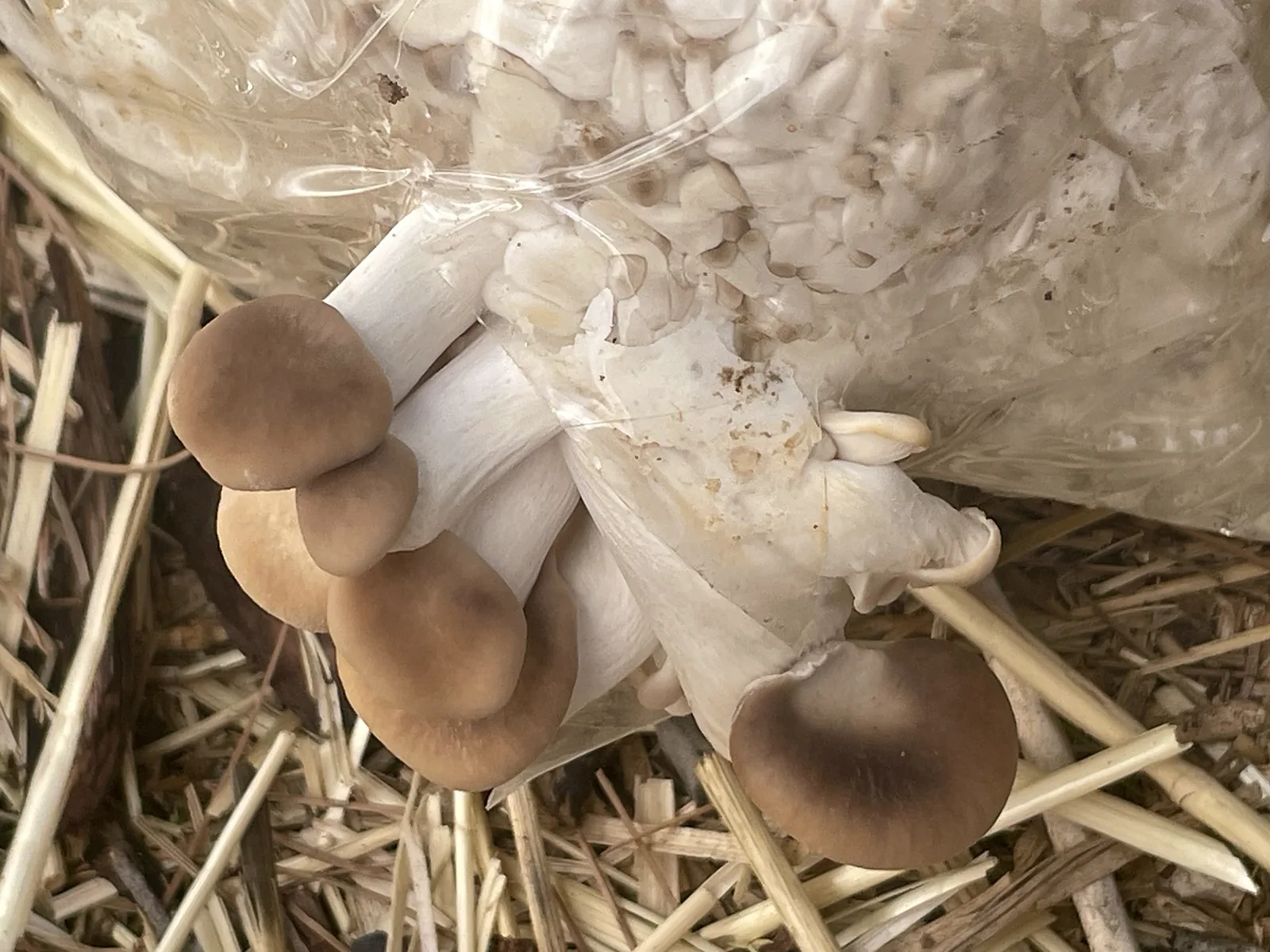
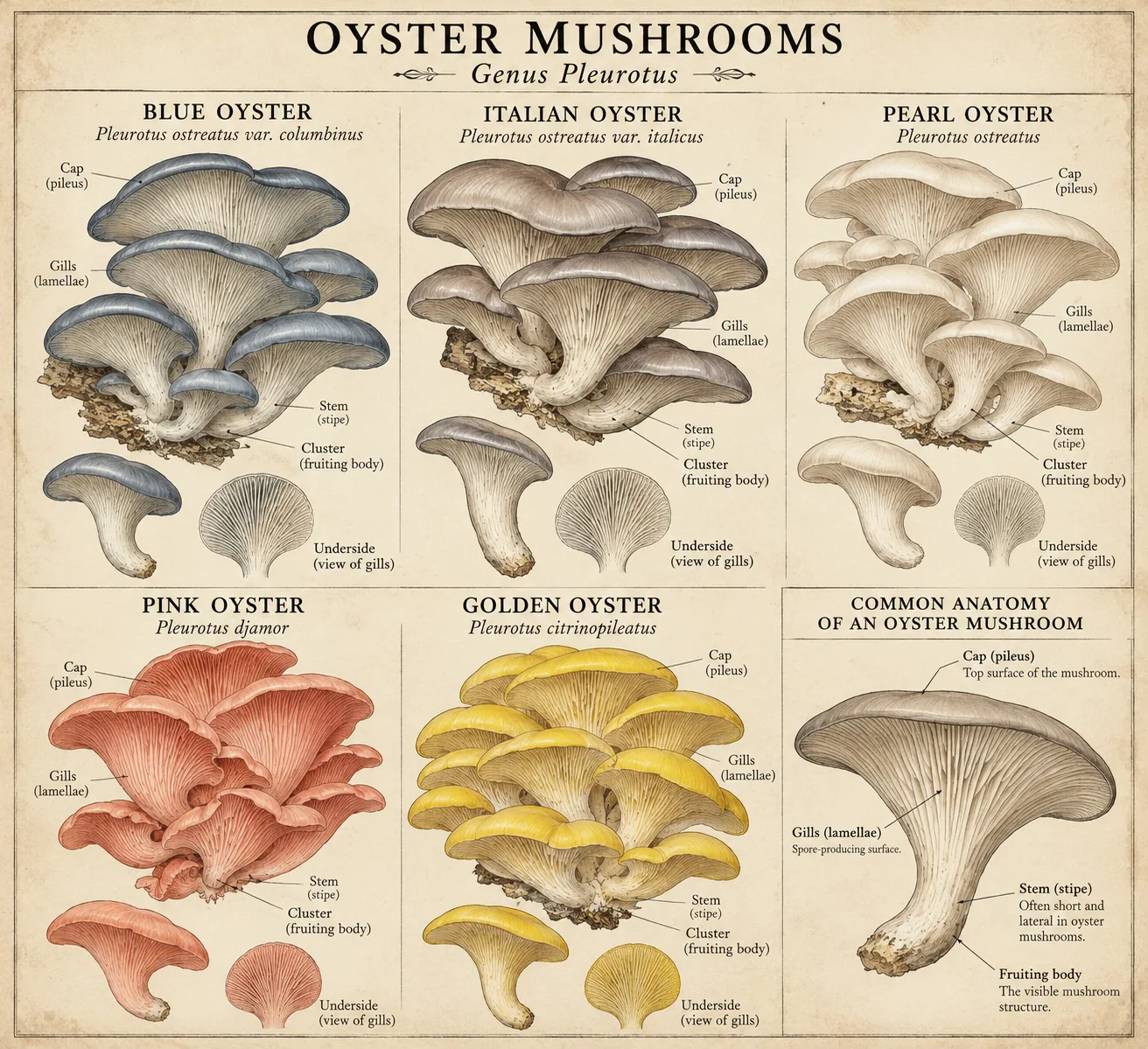
The Italian Oyster Mushroom: Biology, Ecology, Cultivation, and Bioremediation

An examination of Pleurotus pulmonarius, from its role in forest ecosystems to its potential applications in biotechnology. The Italian oyster mushroom (Pleurotus pulmonarius) is one of several closely related species of oyster mushrooms cultivated for food. It is generally associated with warmer growing conditions than the familiar pearl oyster (Pleurotus ostreatus), which makes it an…
Spent Mushroom Substrate Isn’t Really Spent
Filed under: Uncategorized
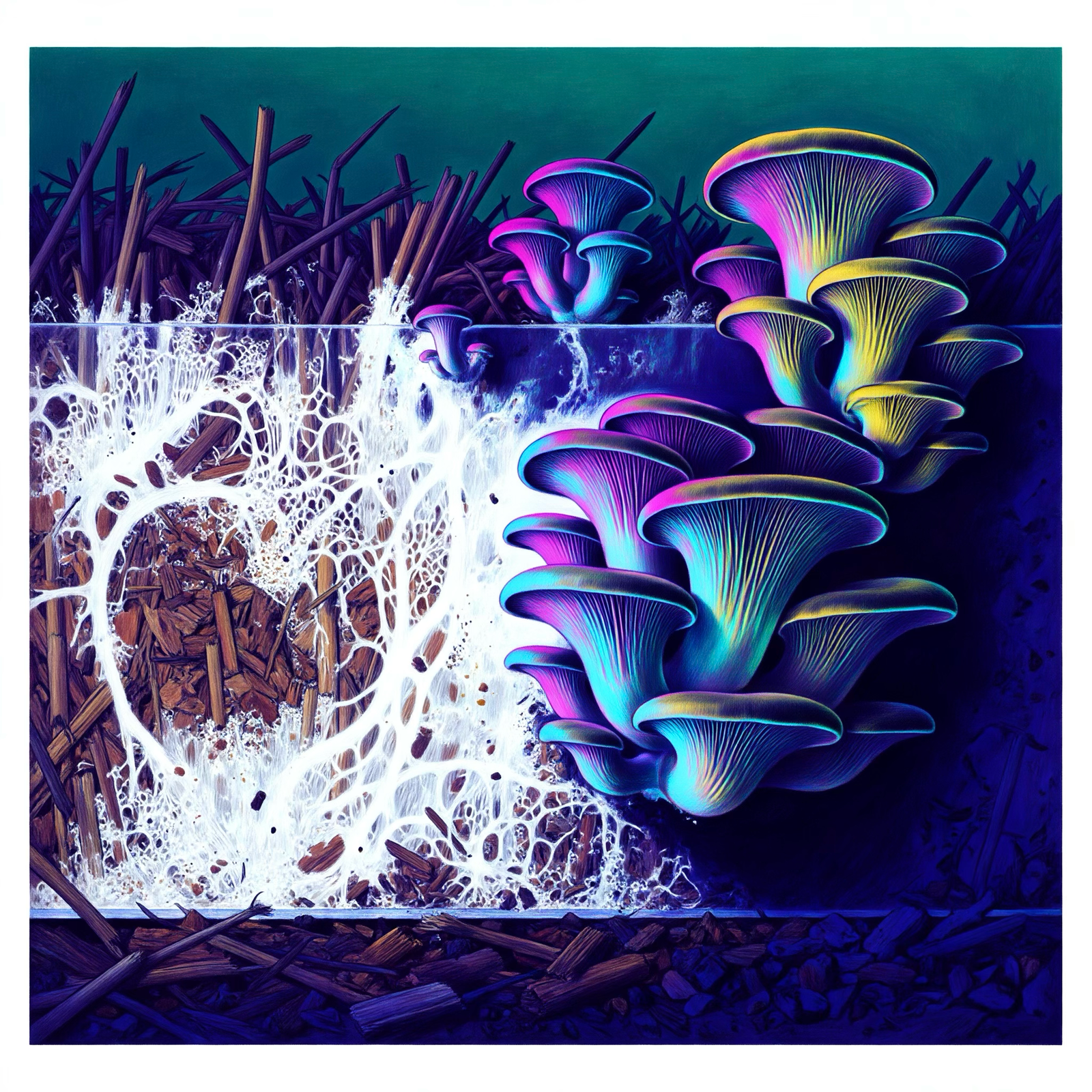
When you grow mushrooms there is this point where the mushrooms are done and you are left with this block that looks like it has already served its purpose. You got the mushrooms out of it, maybe two or three flushes if things went well, and now you have this big chunk of sawdust or…
Fungi as Food Factories
Filed under: Fungi, Plants, Soil, and Gardens
Over the last three years I have added all kinds of organic material to my backyard. Pond muck, worm castings, compost, biochar, whatever I could find and thought might help. When you start with dry dead looking dirt, you spend a lot of time looking at things and wondering whether they belong in the soil…
The Simplest Way to Grow Your First Mushroom
Filed under: Growing Mushrooms Without Making It Scary
If you have never grown mushrooms before, a ready to fruit oyster mushroom block is probably the easiest place to start. You do not need to know how to make grain spawn, work with agar, use a pressure canner, or build anything resembling a laboratory. Most of that can come later if you decide you…
The Fantastic Roots of Mesquite Trees
Filed under: Fungi, Plants, Soil, and Gardens
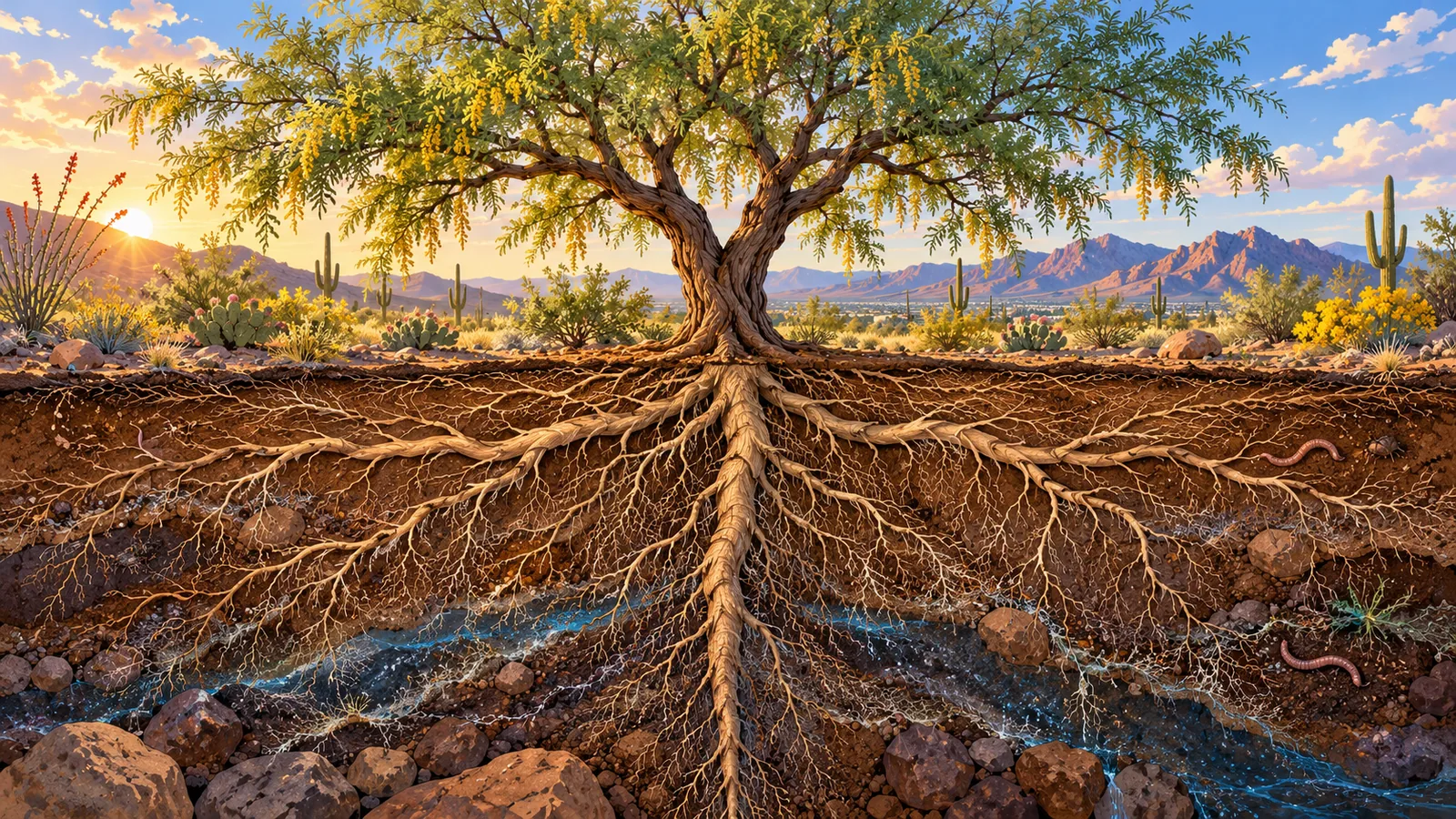
When people talk about mesquite trees and their roots, the taproot usually gets all the attention. That makes sense. Mesquite is famous for sending roots astonishingly deep in search of water. Velvet mesquite roots have been documented at depths of about 175 feet under favorable conditions. But focusing only on the taproot misses most of…
What Is the Rhizosphere?
Filed under: Fungi, Plants, Soil, and Gardens
A Beginner’s Guide to the World Around Plant Roots When most of us think about roots, we probably picture something like underground plumbing. Roots spread through the soil, absorb water and nutrients, and hold the plant in place. That is true, but it leaves out most of what is actually happening underground. A living root…
The Largest Organism on Earth Might Be a Mushroom
Filed under: The Hidden Fungal World
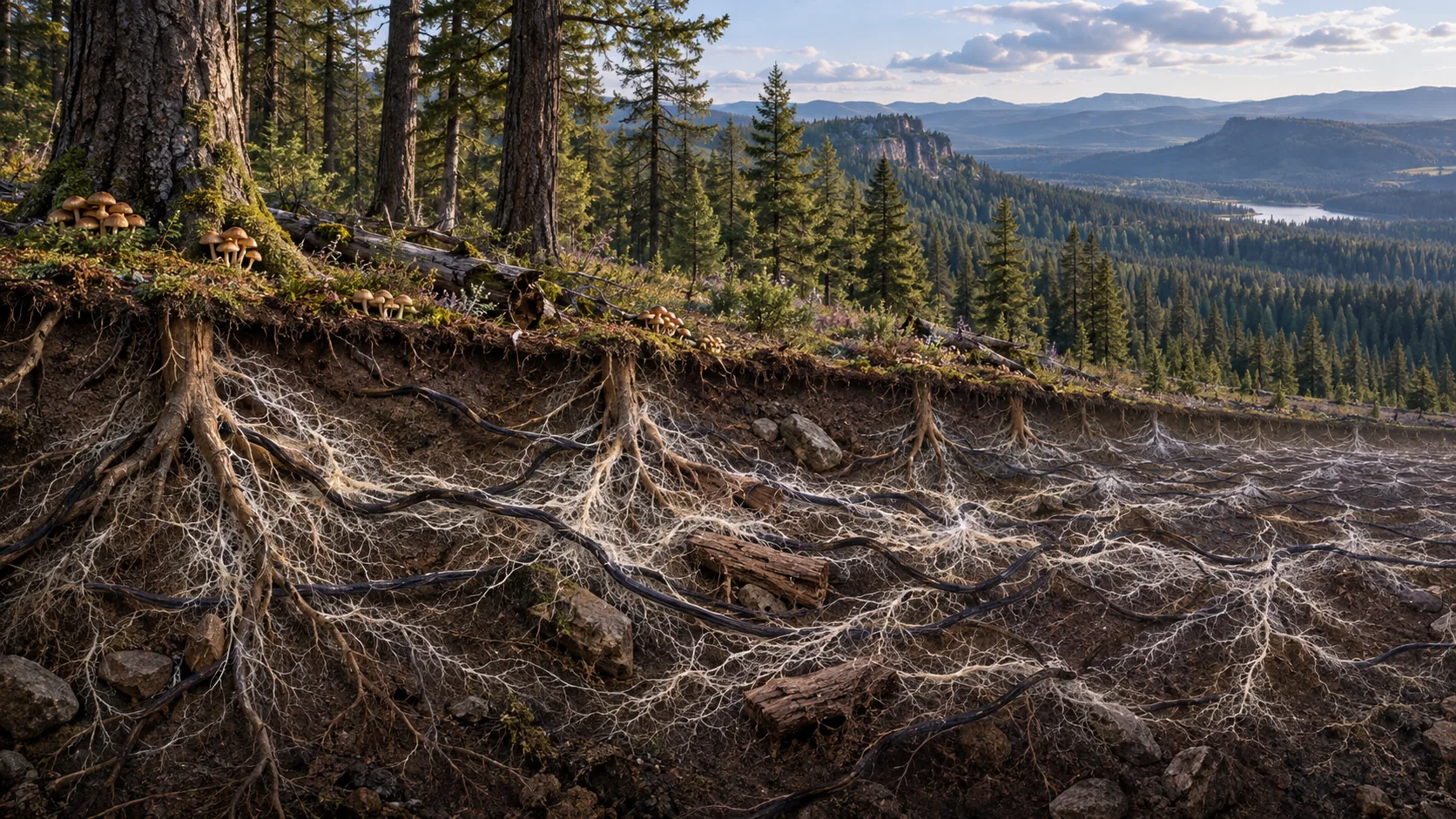
Ask someone to picture the largest organism on Earth and they will probably think of a blue whale. That makes sense. Blue whales are enormous, and they have the advantage of being visible. The organism usually considered the largest is much harder to see. Most of it is underground in eastern Oregon, quietly spreading through…
Should You Remove Mushrooms From a Vegetable Garden in Tucson
Filed under: Tucson, the Sonoran Desert, and Desert Fungi
Generally, I would leave them. I have spent the last three years adding organic material to my backyard and trying to get something going in soil that started out looking pretty dead. A fungus making use of that material would not be my first concern. Whether the soil is doing well, or in the case…