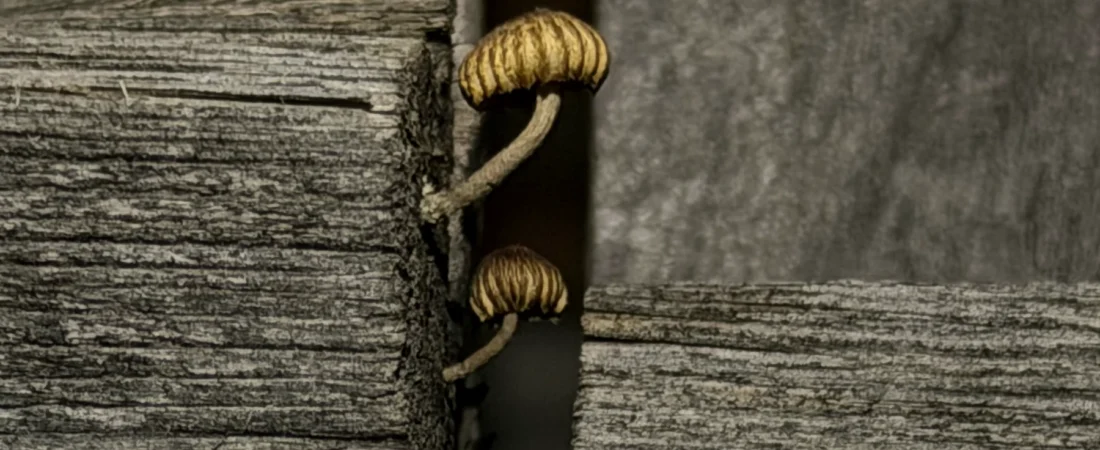
If you garden in Tucson, mushrooms are probably not something you expect to see very often. That is part of what makes it so strange when you walk outside one morning and suddenly there are mushrooms growing next to your tomatoes, under your mulch, or around a drip emitter. In a place this dry, they can seem completely out of place.
But mushrooms showing up in a Tucson vegetable garden usually are not a problem. They are part of a much larger network of life under the ground, and what you see above the soil is only the temporary fruiting body of a fungus that was already there.
Why Mushrooms Show Up in Tucson Gardens
Tucson is obviously not a naturally humid place, so fungi usually need a change in conditions before they produce mushrooms.
Monsoon rain. Summer monsoon storms are probably the most obvious trigger. Wet soil and higher humidity can suddenly create the conditions fungi need to fruit, which is why mushrooms can appear almost overnight and disappear again once things dry out.
Mulch. Wood chips, straw, and other organic materials conserve water and protect the soil, but they also provide food and habitat for fungi. As mulch breaks down, wood decomposing fungi help turn dead plant material into something the rest of the soil community can use.
Drip irrigation. The soil around a drip emitter can become its own little microclimate. If mushrooms repeatedly appear around the same emitter, that spot probably stays moist enough to support fungal growth. That is usually harmless. I would only look more closely at the irrigation if the soil stays soggy, smells sour, or nearby plants begin showing root problems.
Compost and soil amendments. Compost, bagged soil, mulch, and other amendments can also bring fungal spores or living mycelium into the garden. Once they find enough moisture and food, they can establish themselves whether it has rained recently or not.
What Are the Mushrooms Actually Doing?
Many of the fungi we notice in vegetable gardens are wood decomposers. They live on dead roots, wood chips, straw, and other woody material, breaking it down and helping return nutrients to the soil.
They are part of a much larger community that includes bacteria, insects, nematodes, plant roots, and other organisms. That underground life is easy to forget when we are focused only on what is growing above the soil.
What About Mycorrhizal Fungi?
Some fungi have a completely different relationship with plants.
Mycorrhizal fungi form partnerships with plant roots. Their mycelium extends through the surrounding soil and can help plants access water and nutrients.
These are not necessarily the same fungi producing mushrooms in your mulch, but they are part of the same underground world. For a Tucson garden, where native soil is often low in organic matter, building conditions that support this kind of biological activity matters.
Are Mushrooms Hurting Your Vegetables?
Generally, no.
A mushroom growing in your mulch is not competing with your tomatoes the way a weed would. The fungus is usually feeding on dead organic material rather than attacking living vegetable plants.
Mushrooms also do not automatically mean you are overwatering. A few mushrooms after monsoon rain or around an irrigated bed are not enough to diagnose a watering problem.
If the soil stays saturated, smells bad, or nearby plants are developing root problems, then drainage or irrigation may need attention. The mushrooms by themselves are not the problem.
Signs That Something Else May Be Happening
Most garden mushrooms are harmless, but it is worth looking more closely if nearby plants are wilting, yellowing, becoming stunted, or suddenly collapsing without an obvious reason.
White cottony fungal growth directly on stems or roots, or mushrooms growing directly from living plant tissue, may also point to a plant pathogen rather than a fungus simply decomposing dead material.
When Should You Remove Mushrooms?
The main reason I would remove mushrooms from a vegetable garden is safety.
If you have dogs, young kids, or anyone else who might eat an unidentified mushroom, pick the fruiting bodies as they appear and throw them away.
Never assume a wild mushroom is edible because it is growing in a vegetable bed, because an animal has eaten one, or because it looks familiar.
Removing the mushroom does not normally eliminate the fungus itself. Most of the organism remains below the surface as mycelium in the soil, mulch, old roots, or decomposing wood. You are simply removing the part that someone might eat.
What Mushrooms Reveal About a Living Garden
Mushrooms are one of the best things you can see in a garden. They are a reminder that the soil is not just dirt holding plants upright, but a living place full of relationships we usually never get to see.
For a brief moment, a mushroom brings part of that hidden world above the surface.
In a Tucson garden especially, where life often has to wait for the right combination of water, shade, and time, that feels worth paying attention to.
Local Resources
If you are worried about mushrooms in your garden, especially if your plants are also showing signs of disease, the University of Arizona Pima County Master Gardener Plant Clinic is a good local resource.